When opportunities for pleasure are rare, food needs to be taken seriously.

There are increasing efforts to improve the quality of food in care homes, but if a resident cannot experience the taste or smell of what’s on offer, they are unlikely to be enthused about eating, however appetising it looks and whatever its nutritional value.

Research suggests that people living with Alzheimer’s Disease can still identify sweet and salty tastes, whereas their ability to recognise sour and bitter is impaired. Similar results were recorded in healthy people of the same age. On the other hand, unlike the healthy elderly adults in the trial, those with Alzheimer’s demonstrated a lack of ability in identifying odours, and it has long been understood that your sense of smell can have an impact on appetite.

Read the full research article by clicking here.

That inspired me to search further, and of course there’s a host of information on the importance of a good diet for those living with dementia such as Alzheimer’s Society’s Eating_and_drinking_factsheet.

Then Ode’s award-winning product caught my eye, offering a method of stimulating appetite through releasing smells: it creates the link between the power of scent and its effect on our relationship with food. There are three scents in an ode and you decide when each comes on, around preferred mealtimes and daily routines. See more on the Ode website.

What I liked most was the suggestion in The Journal of Dementia Care’s Jan/Feb issue that an alcoholic drink can stimulate appetite. Show me a care home with a decent wine list and I’m booking in!


black porn

Getting to know each other

Carer's Chart

We’re always going on about the importance of needing to know about a resident’s needs and preferences, but what about your staff? Might they like to share what they like and dislike, and might they learn something from the exercise as well?

Encourage your staff to share what matters to them by completing one of these free charts. With everyone’s agreement, display them where other staff, residents and their families can see them, creating an opportunity to appreciate what is important to each other. Generate a sense of mutual respect throughout your community, and create opportunities for meaningful interaction between every member of that community.

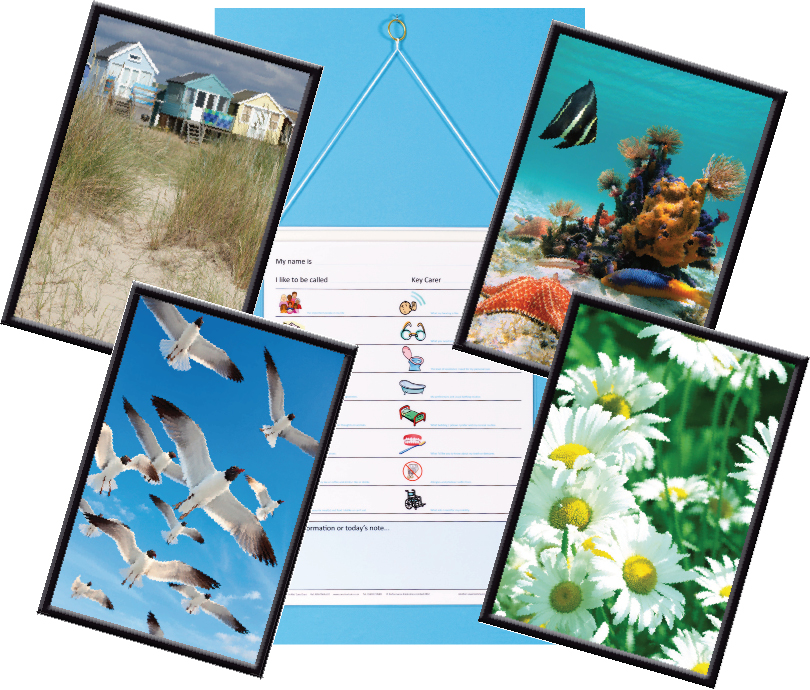
If you are using our Care Charts for your residents you will see that we have used the same symbols* as those on the resident’s charts. This helps make the point that we are all similar in having needs and preferences, that whether we are a carer or someone being cared for, we all have things in our lives that can cause pleasure or distress.

Download as many copies of the Carers Chart A4 as you need, encourage your staff to share, and develop the relationship and mutual respect between staff and residents and their families. Indeed, it may be appropriate to invite family members to participate as well.

And if you’re not already using our Care Charts for your residents, give us a call now, on 01403 210485, or email enquiries@carechartsuk.co.uk for further information.

*If you are using Style 2 and would like a Carer’s Chart in the same style please send us a request via email to enquiries@carechartsuk.co.uk.

youjizz

Physiotherapy has a role to play for both residents and your staff

Karen Middleton, CEO of the Chartered Society of Physiotherapy, considers how physiotherapy helps care home residents to age well and has a role to play in keeping your staff fit as well.

“The modern physiotherapist has a very broad range of skills and this is demonstrated in care homes perhaps as clearly as any setting.

Most people will be aware of the treatment that is delivered to people after illness or injury.

Physiotherapists provide rehabilitation following a stroke or other serious illness and ongoing treatment for people with long-term conditions, such as arthritis or chronic obstructive pulmonary disease.

Often there will be more than one such condition, so physiotherapists use their expertise to draw up a programme of care that helps residents maintain a level of mobility and function.

Physiotherapists also play an essential role in delivering the National Dementia Strategy and there is evidence to show that these interventions reduce the risk of developing the disease, or work to delay the onset and progression of it.

As an example, physiotherapists have the knowledge and skills to identify and treat pain, which many people with dementia have difficulty expressing.

They also provide essential support and education to care home staff and relatives.

The work done by physiotherapists in care homes is not just about providing treatment, however – their role in preventing future ill-health is every bit as important and brings benefits for residents’ physical and mental wellbeing.

Physiotherapists provide advice on the safe ways to exercise at any age, and lead classes that give residents the opportunity to get some physical activity into their weekly routine.

This helps people manage a long-term condition to prevent it from worsening to a point that it requires a hospital admission.

It improves cardiovascular health and keeps the bones, joints and muscles in good working order.

And exercise classes are also shown to reduce the chances of a fall by maintaining muscle strength and improving balance.

Since more than a third of people aged over 65 suffer one or more falls a year, the benefits of this work in a care home are obvious.

Physiotherapy doesn’t just need to be available to residents, however.

An additional role physiotherapists can play in care homes is to provide occupational health services for staff.

Sickness absence can ruin working lives and is expensive for employers because of lower productivity and higher costs. In care homes, it can also be a problem when residents have built up a relationship with staff.

Physiotherapists keep people fit for work and identify any changes that need to be made to the working patterns or the facility to ensure residents receive a continuity of care.

Anyone involved in the care sector – be it as a manager, employee, resident or relative – will know that extraordinary medical advances are keeping people alive longer than ever.

What physiotherapists do – particularly in care homes – is to help people make the most of those additional years by keeping them active, mobile and well.”

For more information on physiotherapy, advice on safe exercising for older people, and details of how to access services, visit www.csp.org.uk.

free gay porn

What chart users have been telling us recently…

“An indispensable part of our holistic care”

WC01 email

Salvation Army’s Furze Hill Care Home has been using our Care Charts for over a year now, and manager Ellie Cant has given her agreement for us to reprint her recent email to us here.

“We find our Remember-I’m-Me Standard Care Charts an indispensable part of our holistic care for residents. We initially bought 10 to see whether they would work for us. The staff and relatives were all very pleased, so we then bought enough to give one to every resident. They’ve been in place for over a year now; because they are wipe clean they can be changed as often as needed and have proved very durable.”

So, not only are the charts having a beneficial impact on the quality of life of staff, relatives and residents, but because the care home can use them time and time again they are excellent value for money.

Read more about the full range of Care Charts.


“It makes such a difference…”

TNVI_set_fb

Apex Care’s Knightswood Care Home has been using our Twist-N-View Care Charts since June 2013, and manager Jayne Booth was kind enough to give us the following feedback…

“We’ve been using the Twist-N-View Care Charts for 6 months, and we find them particularly useful for ensuring new staff are immediately aware of resident’s needs and preferences, as well as making the information available for visiting professionals like nurses. It makes such a difference if a resident is unable to communicate effectively themselves. The system of symbols and prompts ensures we use easy-to-understand, simple English and staff can easily find the information they need.” .


“I decided if there was no such thing I’d have to invent it…”

RIM_promopack 600pxl

Most of our charts are currently bought by care homes or domiciliary agencies, but we welcome individual orders as well, and love to hear the stories that have brought someone to our door. Jo placed an order with us in early January…

“I found you on Google because I was searching (not for the first time) to see if there was anything like your care charts already in existence. After several years of trying to get messages across to staff in all sorts of settings (home, hospital, care home), I decided that if there was no such thing, I would have to invent it! Luckily for me, you have already done that part…”

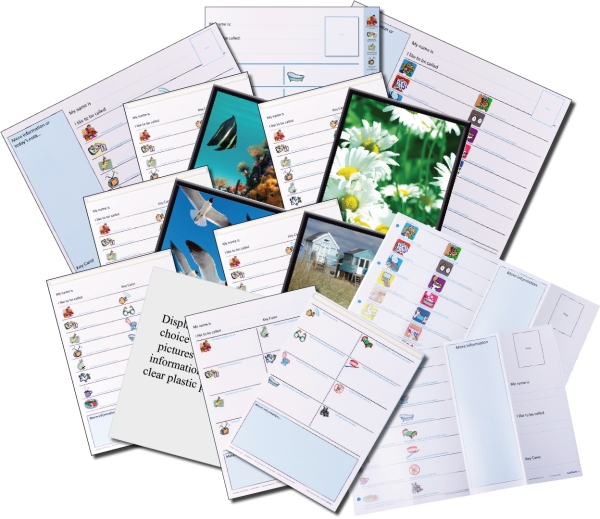
Jo’s Mum is in a care home, she has bought a Care Chart to help with her care and because Jo believes (as we do) it will be better used if it is part of the system of care within the care home, she has bought a Promo pack to see if the care home might be interested in adopting them too. We look forward to a positive outcome!

More about Promo Packs…


“Where can we buy these please…?”RIM Pocket front

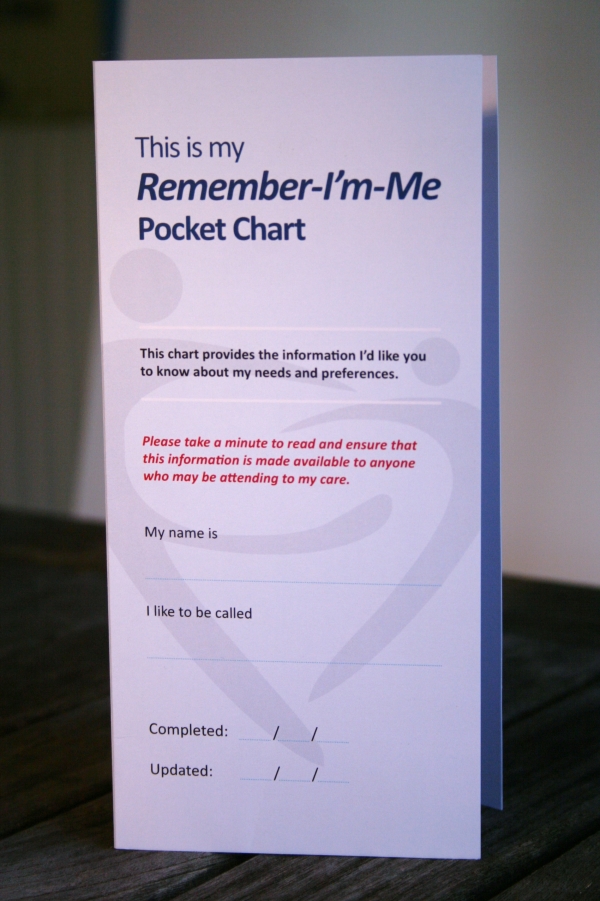
Our Pocket Chart caught the attention of hospital staff in Staffordshire recently. Obviously that’s the idea, but this time, after a care home manager had completed and sent in a Pocket Care Chart with one of her residents who had to make a trip to hospital, she received a phone call from the ward asking where they could buy some for other patients! This small but perfectly formed version of our care charts is ideal for ensuring that an individual’s needs and preferences can be made known wherever they are. Every care home should have a pack in the drawer!


More about Pocket Charts


large porn tube

What have we been talking about in past newsletters?

We’ve been sending out a regular newsletter since August 2013 and have touched on a wide range of subjects. Here’s a chance to re-visit an issue if you didn’t see it at the time…

April 2015 Pets as Therapy / Bespoke Care Charts / Book Review: Dementia: The One-Stop Guide / Designing Outdoor Spaces / Free download /

March 2015 It’s not the garden design that matters… / Have you seen Alive Inside / Skills for Care Culture Toolkit / SCIE Guidance on the Care Act / Book Review: On Pluto, Inside the Mind of Alzheimers

Feb 2015 Twist-N-View now available with breakaway device and anti-bacterial cord / How to adapt your environment for people with dementia / Book Review: The Things Between Us

Nov/Dec 2014 Care Charts Founder included on list of HSJ Innovators 2014 / Does the colour of crockery make a difference / An exclusive Christmas offer on Many Happy Returns Chatterbox cards / The power of music / More news from the Garden / Book review: Dancing with Dementia

October 2014 Epsom Hospital puts Care Charts at the heart of their dementia care / COT Toolkit: Living well through activity in Care Homes / More News from the Garden / Book Review: Person-centred Dementia Care by Dawn Brooker / The CQC annual report on the state of health care

September 2014 Care Charts UK named as one of the New Radicals / PJ Care adopt Care Charts for their neurological care centres / Calling all care caterers / The Understanding Dementia MOOC / Rootless Garden: Using Activities Inspired by Nature / Book Review: And Still the Music Plays

July/August 2014 How Avery Lodge is using its Display Care Charts / When Conversation becomes Therapy / Why WW2 Experiences Still Matter / Book Review: Dear Dementia, the Laughter and the Tears / Bright Shadow Brings Energy and Fun / News from the Garden: A Healing Garden Project

June 2014 The power of touch / Using dolls in dementia care / Book Review: Kate Granger’s 2 books / Palliative Care / Staff Training Board / News from the Garden: Kim Grove

May 2014 Reminiscence Boxes / Jargon Buster (TLAP) / National Care Open Day / Care2Improve / Garden News: Buzz Creative Spaces / Free Poster Download

April 2014 Scottish Inspectorate approve Care Charts / Virtual Hospital (DSDC) / Good Care Week / Joining up Care Homes and Primary Care Services (scie) / Garden News: Top doctor backs ‘garden gym’ / Grief / Free Carer’s Chart Download

March 2014 See Change: Think Pain (NAPP) / Quality Paperwork v Quality Care (JRF), Nutrition and Smell / Grief (scie) / Garden News: Thrive

February 2014 Peninsula Community Health adopt charts for all hospitals / Benefits of Physio (CSP) / Dementia courses (UTAS, John Hopkins) / Book review: Living well with Dementia / Charts in Award-Winning Home / Garden News: Chalfont Design’s Dementia Green Care Handbook

January 2014 Care Rocks / Delirium (DSDC) / Garden News: a sensory experience / Care Awards win / Environmental Assesssment Tool (King’s Fund) / Integration (scie)

December 2013 Innovator’s Award win / Birmingham Care Show / What Motivates Staff / Staff Training Board / Flowers of the Month

November 2013 GB Care Awards finalist / Peninsula Community Health Care complete charts trial / Birmingham Care Show / Flower Power / NHS Changeday / Reminiscence Conference / HCBC ‘Be Sure’ film

October 2013 Charts selected by award-winning care home / Why use pictures / Pain assessment app / Flowers of the month / Book review: Managing dementia in General Practice

September 2013 Charts testimonial / Resource: Making involvement count

August 2013 Launch of Art Packs / Paper v screen / Eden Alternative / Schwartz Center Rounds (King’s Fund) / Launch of new sizes for Daily Prompt Posters / Staff Training Board


xhamster

Money isn’t the motivator we think it is…

Screen capture from YouTubeIt’s surely very simple, isn’t it? Pay your staff more and they’ll provide better performance. Not so, according to Daniel H. Pink, author of Drive: The Surprising Truth About What Motivates Us. In certain circumstances, he suggests, it could even lead to less efficiency.

The secret to high performance and satisfaction—at work, at school, and at home—is the deeply human need to direct our own lives, to learn and create new things, and to do better by ourselves and our world.

Drawing on four decades of scientific research on human motivation, Pink exposes the mismatch between what science knows and what business does—and how that affects every aspect of life.

Here is an entertaining YouTube clip that helps clarify what Pink is talking about:

http://www.youtube.com/watch?v=u6XAPnuFjJc

This is not an excuse to pay staff less – Pink does make it clear that for his hypothesise to work employees have to be earning enough money to know they can pay the bills – but it does suggest the frequently presented argument: ‘staff need to be paid better if we are to expect higher standards’ does not stack up.

Another way of looking at this is in terms of employee engagement, and if you’re conscious that your staff may not be as engaged as you’d like, you are not alone. Globally, according to Towers Watson’s 2012 Global Workforce Study, only 35% of employees around the world are strongly engaged, meaning they are freely giving their time, energy, creativity and knowledge to their work. And in the UK it is a lowly 27%, ranking us 9th in the 12 largest economies.

Engagement is understood to have a huge impact on staff retention: Engage for Success suggests that “highly engaged organisations have the potential to reduce staff turnover by 87%; the disengaged are four times more likely to leave the organisation than the average employee (CLC 2008).”

There’s a lot of interesting reading in the links provided above, but if you want it in a nutshell, make sure that your company values are clear and understood, empower your staff by ensuring they have the right tools and training to do their jobs properly, value them in the same way you value your ‘customers’, give them scope to excel in their work, and make sure you listen to, and act on, their ideas for what could be improved. And it is all these things, say the experts, and not extra money or bonuses that will help you retain your staff and improve your chances of having a happy and engaged workforce, translating into better outcomes for the individuals in your care.

youporn

We won the Innovator Award!

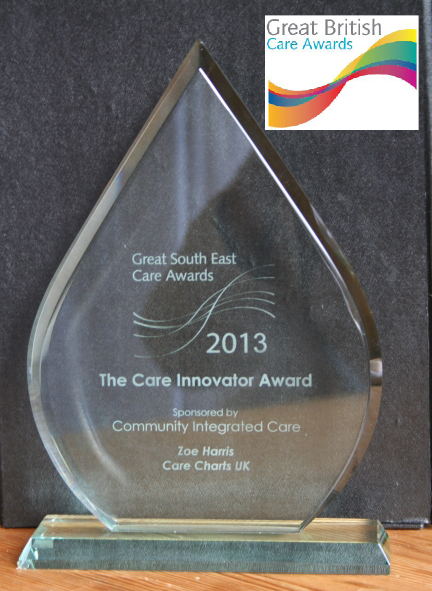
GBCA trophy plus logoLast month I heard we had been shortlisted for the south east Innovator Award by the GB Care Awards, and on Friday 29th Nov we went to the Awards Ceremony to hear that we’d won! As much as I already knew that these products, inspired by my husband’s experience with dementia, really do make a difference, it’s always wonderful to have it confirmed by something like this.

In the judges’ words: “Zoe has developed and continues to develop a truly excellent innovative idea that meets the needs of the residents and staff and ensures quality of care. A well deserved winner – congratulations!”

I met some great people on the night, and would like to congratulate all winners and runners-up.

Latest: See also Observer / Nesta list of New Radicals 2014

anime porn

Twist-N-View Care Charts help Reduce Average Length of Stay in Community Hospitals

Having run a comprehensive trial for six months in one ward, Peninsula Community Health is introducing the Twist-N-View care charts into all 17 wards in their 14 community hospitals.

Peninsula is a not-for-profit Community Interest Company and provides NHS adult community health services to local people in Cornwall and Isles of Scilly. Sue Greenwood MBE, Dementia Lead at Peninsula, explains the background, how they conducted the trial and what the outcomes were.

“We recognised that personalisation of care is crucial if we are to meet the individual needs of the people we are delivering care to, but to offer that quality of care we needed to find a way of ensuring that staff had the information they needed about each person, particularly important when a person is unable to communicate their own needs and preferences.

“We were using our admission paperwork but this did not prompt staff to ask the questions that would inform us of the individual person, knowing who they are, what mattered to them and how they wished to be cared for and supported. The driver for Peninsula Community Health was a move towards treating people as individuals and not as a clinical condition. Working with the staff in the clinical area was challenging, however support and guidance and education enabled us to ensure the ward team owned the change that was needed.

“Care Charts UK’s Twist-N-View charts allowed us to design bespoke care needs for individual patients. The charts are easily accessible and available for the whole multi-disciplinary team. We introduced one to one educational interactive sessions to start to talk to the staff about personalisation of care and how the charts could be used to ensure that those really important conversations with the patient and the carer or family member could lead to better understanding of individual needs and what’s really important for that person. One way of doing this was for staff to complete a chart about themselves.

“The team have been supported in the adoption of the charts by specialists as well as peer to peer support and training. No change is easy to implement, inevitable barriers do have to be addressed, however the ward team have wholly owned this change and have been able to overcome some of the initial resistance to the change in practice.

“The feedback received from some staff was really exciting; the charts gave staff opportunistic moments to interact with patients. This was a new experience for some staff (Health Care Assistants, General Service Assistants, Therapy Support Staff and House Keepers) who may have felt reluctant to engage in conversation prior to the introduction of the charts. We have also been able to work in partnership with the 3rd sector in utilising the skills of volunteers in completing the charts.

“We were able to achieve the foundations we needed to build on around the introduction of personalisation of care. The charts allowed us to go beyond just a list of likes. What’s important to people goes beyond the information that is collected using admission paperwork which tends to concentrate on the condition or medical problem rather than the person. We were also able to understand what we could do to manage difficult situations that may arise, for instance what to do if someone with dementia became agitated or confused. Periods like this can very easily escalate and become very difficult to manage. If we could understand the person and understand what family members and loved ones do at home to manage this then we could better care for the people we were looking after and understand much more of the person we were caring for.

“Staff on the unit became involved in completing the charts; it allowed our Health Care Assistants, Housekeepers, Therapy Support staff and General Service Assistants to be a part of the care delivered to patients. In short, it connected every member of the team to the patient and recognised their value and the care they delivered every day to patients. This had never been validated before and was very well received on the unit. For an organisation this was a very exciting tool that enabled us to shift the agenda towards the Personalisation of Care at a much quicker pace than was expected. It also allowed those staff involved in care every day to validate their worth and feel included in the delivery of high quality care. Because we were able to fully understand the individual needs of our patients the introduction of the charts enabled us to reduce the time a patient needed to stay in hospital. We were also able to reduce the number of complaints and inappropriate referrals.

The return on investment is evident in numerous areas:

  • Raised the quality of care being provided
  • Increased positive outcomes for patients and families
  • Reduction in complaints
  • Reduction in episodes of distress and agitation
  • Being able to provide the right care at the right time
  • Reduction in average length of stay
  • Increased staff satisfaction / improved staff morale
  • Increase in staff awareness of personalisation of care
  • Better use of clinical time”

Steve Jenkin Chief Executive Peninsula Community Health

“The introduction of the Care Charts has enabled us to build a firm foundation within Peninsula Community Health in relation to the Personalisation of Care which is central to the way we want to deliver care and work in partnership with families and carers. Because the charts can be wiped off and re-used we are confident that the eventual cost will be a matter of pence per patient.”

Quantitative Data

Peninsula calculated that the financial saving as a result of reducing the average length of stay equated to more than 10 times the cost of the charts in a 6 month period. That’s over 1000% Return on Investment in 6 months.

Qualitative Data

Peninsula collected an extensive range of feedback from members of staff, patients and their family during the trial. Here are a few of those comments…

Relatives

“It’s nice to know that staff can talk to mum about things which interest her when we are not here as we are unable to visit every day”

“This helps people to know the person”

“Gives staff a greater understanding, the care is good”

“This covers some really important information about my dad”

“Don’t see any problems with confidentiality”

“The more information staff has the better they can provide care”

Staff

“Information recorded about how patients drink tea is very relevant to my swallowing assessments”

“As long as care staff are referring to the information I think it’s a great idea, I will now be able to add safe swallowing advice in the additional notes section”

“Over all a good idea in light of importance of confidentiality”

“Great when gaining rapport and trust for assessments”

“Very good as I always like to know what someone’s occupation was, as well as interests when they were younger”

“No problem with confidentiality as they look like pictures”

“This is a good tool especially if the information is detailed”

“It’s a great quick reference especially as I don’t always know the patients well”

“Very informative, it was also a good way to interact with patients, and a great way of having a good understanding of their overall likes and dislikes and limitations etc.”

Patients

“Good, simple and effective” “Very positive way of promoting communication between staff patients and family members”

“Good idea and it brightens up the ward”

“The information is very good”

“Staff seem to talk to me more about things that interest me”

“It’s perfect”

“I have been in before but everyone seems to know more about me this time”

free black porn

We’re finalists in the GB Care Awards 2013!

GBCA 2013 Regional finalist logo for websiteI am so proud that the Care Charts have been selected as finalists for the Innovation Award in this year’s GB Care Awards. It’s great to have our hard work and the value of our products recognised. Congratulations to all the other finalists across all categories and regions and fingers crossed for the next round!

milf porn

Care Charts selected by home to help with award-winning care

peregrine emailWe are very proud to have our care charts in use at the care home managed by the National Care Home Manager of the Year, Alison Bedford, which has also recently become the first care home in the country to be accredited with the Excellence in Care Standard award.

“2013 is turning out to be a very good year for Peregrine House,” said owner Kevin O’Sullivan, “Alison thoroughly deserves her award, and we’re pleased that the hard work and excellent attitude of all our staff has been recognised with the Excellence in Care Standard Award as well. Our aim is to care for our residents in the same way that we would look after the most loved member of our own family, and we’ve been using the Remember-I’m-Me Care Charts successfully for over a year now to help us achieve that aim.”

rape porn