Spread the cost of your care charts

There are hundreds of care homes who have been using their Care Charts for over three years now, and we frequently get feedback as to what good value for money they offer.

Nevertheless, we understand the constraints cashflow can impose, and we’d like to do what we can to help you incorporate Care Charts into the daily life of your organisation.

So we are delighted to offer you the opportunity to spread your payment over up to 6 months*. Your payment schedule can be set up in a matter of minutes; just email us to say what you’d like to order and over how many months, or call us on 01403 210485 to chat it through if you prefer. It won’t cost you a penny more and you can delight your staff, inspectors, residents and their families with this care-enhancing device, whilst minimising the impact on your cashflow.

*Min: £100 Max: £1,000 Max timescale: 6 months

Founder’s story published in HSJ

Having been named as one of the Health Service Journal’s Innovators in 2014, Care Charts UK founder Zoe Harris was invited by the HSJ to tell the story of how the first care chart came into being.

[symple_button url=”http://www.hsj.co.uk/home/innovation-and-efficiency/care-charts-can-personalise-care/5090141.article?blocktitle=Innovation&contentID=15327#.Vi9YfrfhDIV” color=”pink” target=”self” rel=””]Read the full article…[/symple_button]


Founder awarded grant for product development

UnLtd-AwardWinner_FullColour_3000px


We were delighted to hear that our founder Zoe Harris has been selected as one of 29 social entrepreneurs to receive funding from UnLtd as part of the The Coutts Foundation Solutions for an Ageing Society programme.

The competition was fierce, with the final group selected from over 250 applicants, and what clinched it for Zoe was the simplicity of her solutions, and her clear vision of what she could achieve with the grant on offer.

“The judges immediately ‘got’ the charts, and liked the fact that we have evidence to demonstrate they really do make a difference in a wide range of caring environments,” explained Zoe. “They also understood the need to address the communication issues people face when being cared for in their own homes.”

“The Fast Growth Awards are our opportunity to recognise people with brilliant solutions to the social problems we face as a nation,” said Cliff Prior, CEO at UnLtd. “Together with our partners, we help them scale nationally and internationally for greater social impact. We’re excited to see such a diverse group of entrepreneurs this year, tackling problems in a huge variety of sectors, and we look forward to supporting them as they scale over the coming year.”

This funding allows Care Charts UK to get cracking on a five part project to bring a range of home care communication tools to market. First stage is a questionnaire, where we want to collect the opinions and thoughts of carers who have been or are caring for someone in their own home (whether paid or unpaid), as well as from those who have been or are being cared for. Second stage will be a focus group brainstorming the ideas collected. Third stage will be developing prototypes to trial, fourth will be to conduct trials and adapt designs as required, and the fifth stage will be to make the range available nationwide.

This is a link to the questionnaire, which we would very much like all carers, both paid and unpaid, and those being cared for, to complete: https://www.surveymonkey.com/r/CCUKhomecare.

Pets as Therapy

The idea that pets can play a therapeutic role is not new: the charity Pets as Therapy was founded over 30 years ago and 4,500 dogs and 108 cats now visit over 130,000 people every week. That’s a staggering half million bedside pet visits each year, giving both young and old the pleasure and chance to cuddle and talk to them. What is more recent, however, is researchers’ attempts to understand why this can have such a positive impact on people’s health and wellbeing.

“Pets hold a special place in many people’s hearts and lives, and there is compelling evidence from clinical and laboratory studies that interacting with pets can be beneficial to the physical, social and emotional wellbeing of humans,” says Lori Palley, DVM, of the MGH Center for Comparative Medicine. “Several previous studies have found that levels of neurohormones like oxytocin – which is involved in pair-bonding and maternal attachment – rise after interaction with pets, and new brain imaging technologies are helping us begin to understand the neurobiological basis of the relationship, which is exciting.” More details of Lori’s research and report can be accessed here.

The Alzheimer’s Society touched on this in their Living with Dementia magazine back in 2011, quoting Jane Fossey, a clinical psychologist and a trustee of the Society for Companion Animal Studies (SCAS), which promotes the health and social benefits of human-animal interactions. “A number of small-scale studies suggest that introducing animals into care homes can have positive effects for people with dementia. For example, spending time with visiting animals has been shown to reduce blood pressure and anxiety, and improve social interaction and sleeping patterns. It can also reduce the late-afternoon restlessness that can affect people with dementia.”

No wonder then, that no less than 7,721 care homes in the UK declare themselves to be pet friendly (see the full list on the carehome website) with some organisations placing animals centre stage in their daily life. In Eden Alternative nursing homes, for example, dogs, cats and birds live among and interact with the residents, “lessening their sense of loneliness and boredom”.

Meet Nala the Teacup Poodle, lifting the spirits of residents at a care home in Minnesota.

The Spark of Life approach, which has been adopted by a number of care homes in USA, Scandinavia, Australia and Europe, claim that “the interaction that occurs with an animal companion diffuses loneliness and gives the person with dementia a reason to live and get up in the morning. Caring for a pet automatically enables the person with dementia to be needed and useful, gives them the opportunity to care, they have someone to love and who loves them back unconditionally, and their self-esteem is boosted as a proud pet owner.”

So pets can play a valuable role in care homes, either in the form of a visiting therapy or as permanent residents. But Dementia Dog are extending the role of ‘a man’s best friend’ further still. Every year, 25% of the puppies bred to be a guide dog for the blind fail to pass the rigorous tests, but there now may be an alternative role for them. Dementia Dog aims to pair people in the early phases of dementia who live with a full time carer with a dog trained specifically to assist them in their day to day lives.

The dogs provide at least three assistive tasks to their partner, such as support for daily living routines (waking, eating, getting exercise and going to the toilet), reminders (such as prompts to take medicine, drink fluids and other user identified regular tasks), or soft support issues (such as companionship and acting as an icebreaker in social situations).

Then there are projects that harness the benefits of other animals, such as HenPower, a heart-warming project which caught the attention of the media recently. A 12-month study of the project by Northumbria University found HenPower is: improving the health and wellbeing of older people, reducing depression and loneliness in older people and reducing the need for antipsychotic medication. Pippa Kelly’s excellent blog on HenPower provides more detail.

Ann Napoletan’s experience sums it up beautifully, so she should have the last word: “Anyone who owns a dog or cat can attest to the beauty of their unconditional love, and animals often forge a special connection with Alzheimer’s and dementia patients. My mom had a cat for a number of years, and their bond was inexplicable.  Holly wore a perpetually annoyed expression on her feline face and loathed most humans, yet she never left my mom’s side; as much as she detested being picked up, that darn cat would even let Mom carry her around like a rag doll. It never failed to amaze me. Somehow Holly knew that her special person needed a special kind of love.”

Photo by Joel J. Martínez on Unsplash

Further contacts:

Therapaws, North and West London. “Therapaws is a visiting animal therapy programme delivered by The Mayhew Animal Home. We recognise the benefits of taking animals into the care setting to engage with older people, encouraging social interaction to promote emotional and physical wellbeing. We specialise in visits to people with dementia and to palliative care centres. Our volunteers and their dogs go on regular visits to care homes, day centres, hospices and hospitals across North and West London.”

Owls About Town, Selsey West Sussex. “Our ‘Wise Owl’ experience is delivered by the calmest and most tolerant of Owls. We have found these sessions to be particularly beneficial to older people and those suffering with memory issues, such as Dementia. These experiences are very touching at times, seeing the joy on peoples faces when they interact with such majestic creatures.”

Wings of Freedom visit care homes and offer a very personal experience for everyone, giving a real life skill view of all things Owls and Birds of prey. For those people who may not wish to join in or get to the group, they do walkabouts to rooms.

For trips out, what better way of getting back to nature and into the fresh air than visiting your local Care Farm? Care Farming UK have a list of suitable venues near you, and award-winning journalist Pippa Kelly has written in interesting article on the subject of care farms and dementia.

The Donkey Sanctuary “Our team of specially trained donkeys offer an outreach service visiting hospices and local residential homes including those dealing with dementia care. The donkeys prove to be a great stimulation and provide valuable assisted therapy to residents… The donkeys also love the warmth and affection from vulnerable residents so the animal assisted therapy goes both ways!” You will find Donkey Sanctuaries in Sidmouth, Belfast, Birmingham, Derbyshire, Ivybridge, Leeds and Manchester.

The power of music

Why does music have so much power? In a fascinating article the physician, neurologist and author Oliver Sacks, suggested this is a question that goes to the heart of being human. We turn to music, he said, because we need it, because of its ability to move us, to induce feelings and moods, states of mind.

We may still not know why, but those who work with people with autism or frontal lobe syndromes, and particularly with people with dementia, have recognised the power that music has to generate an emotional response, familiar music perhaps evoking memories of earlier events in people’s lives that cannot be reached any other way.

Research undertaken by the University of Iowa confirms the relevance of this for people living with dementia. UI researchers showed individuals with Alzheimer’s disease clips of sad and happy movies. Five minutes later, most were unable to recall any factual information about the films, and one person didn’t even remember watching any movies. Yet these people experienced sustained states of sadness and happiness.

The researchers concluded: “The fact that forgotten events can continue to exert a profound influence on a patient’s emotional life highlights the need for caregivers to avoid causing negative feelings and to try to induce positive feelings.”

Attempts to ensure an individual’s emotional wellbeing, therefore, should be at the heart of all care, and music is increasingly recognised as a powerful tool to assist in this aim. Of course, it has to be remembered that everyone is unique and what works for one person will not be appropriate for the next. A carer who likes nothing better than listening to hours of punk should not assume that those in their care feel the same way, equally, don’t assume that there isn’t a punk enthusiast amongst them either!

If we are looking for something to lift our mood, classical music is best, even if it’s not normally your favourite listening, according to Dr Mike Lowis. ‘In order to activate both sides of the brain, music needs to be complex so pop music and anything with a heavy beat doesn’t usually work,’ he says. (His study of peak experiences found that Wagner was more uplifting than Mozart.)

However, the inspirational and emotional story told in the American film Alive Inside, winner of the Audience Award at the 2014 Sundance Film Festival, would suggest that the true power of music is realised when particular tracks or genres are used to trigger memories and restore a sense of ‘self’, even in those with profound memory loss.

A quick story on how my husband continued to enjoy music as he neared the end of his life in a care home, rarely speaking, unable to do anything for himself, profoundly confused. As I prepared to say goodbye after one of my daily visits I asked him if he’d like any music on. He didn’t respond so I saw that a CD of one of his favourite musicians, Eric Clapton, was in the player and pressed the Play button, only to hear Geoff loudly lament “Not again!” as the sound of Clapton’s wonderful guitar playing filled the room. I had clearly not been the only lazy person in his room that day! It takes more than popping a CD into the player for music to work its magic. 

Fortunately, there are a growing number of organizations, campaigns and resources dedicated to making music an integral part of dementia care. We’ve included links to some of these below.


Resources on the use of music in dementia care:

Read more about Alive Inside and the work of Music and Memory, watch the trailer and purchase the DVD here.

Organisations that offer live music experiences:

Thanks for the Memory uses the power of music to create ‘Memory Moments’ and was established by Tim Ashcroft and his wife Renee, to help those living with memory loss or dementia and to help their families. They put on concerts for those with dementia and raise money to help other groups working with dementia patients and their families.

Lost Chord is a Charity dedicated to transforming the lives of those living with dementia and their families, using music in residential homes across the UK. 

Singing for the Brain is a service provided by Alzheimer’s Society.

Music in Hospitals Scotland is a registered charity and aims to improve the quality of life for people of all ages in care through the provision of professional live music. Concerts take place in hospitals, hospices, care homes, day centres and special needs schools, bringing the benefits of live music to people who need it most.

Resources for finding recorded music and creating playlists:

The Music for Dementia 2020 campaign shares best practice, research and music-based activities for people living with dementia. Their latest initiative urges people with dementia, their families and carers to build music playlists and offers free guides to help. They also offer a Musical Map for Dementia to help people with dementia find music related events and services in their area.

Playlist for Life has a vision: that every person with dementia has access to a unique playlist of their life, to help unlock who they are. Playlist for Life encourages families and caregivers to create a playlist of personally meaningful music on an ipod for people with dementia.

BBC Music Memories is a website designed to use music to help people with #dementia reconnect with their most powerful memories.You can use its databases to find favourite music – from classical to pop, to TV themes and even football chants – and create personal playlists.

Reminiscence Radio creates programmes featuring music from the 1940s-1970s, curated for people with short-term memory issues, designed to create a safe, reassuring place.

Information about the use and benefits of music in dementia care:

Dementia through Music: A Resource Book for Activities Providers and Care Staff, edited by Catherine Richard. An accessible guide to music activities for people with dementia for use by activity leaders, care staff and therapists, drawing on the expertise of people regularly using music in their work. Published 2020.  

The British Association for Music Therapy is a good source for further information.

The fabulous infographic from 3SpiritUK, the health and social care training company, contains a wealth of information on why and how music can help in the care of people with dementia.Click here for further information

Live Music Now and the University of Winchester worked in partnership with MHA (Methodist Homes) and The Orders of St John Care Trust to investigate the impact of music on residents, staff and the general care home environment. This has led to the report “LIVE MUSIC IN CARE”, which was published in 2019. The report finds that, “Carefully delivered music can provide significant benefits for older people, care staff and care settings, contributing to person-centred care. We recommend that regular participatory music programmes be considered essential for all UK care homes.”

“Music can soothe, stimulate and bring to mind long-forgotten memories” say Age UK in their information sheet on Dementia and Music.

5 reasons why music boosts brain activity, from Alzheimers.Net

How Singing Can Help People With Dementia, from Relish.

Personal experiences and first hand accounts:

Pippa Kelly, a writer and campaigner on dementia and elderly care, often writes about music and dementia on her blog. She describes her personal experiences of witnessing the power of music to connect people even when their dementia is very advanced. She also features people, organisations and projects that  enhance the lives of people with dementia and their families through music.

Full time carer for his Mum, Martyn has written about Dementia, Music and Emotions.

In this clip from Women’s Hour on Radio 4, Agnes Houston shares her personal story about music, marriage dementia and hyperacusis (a condition that affects how you perceive sounds). It’s a powerful story and highly recommended listening. 

If you wish to recommend a resource for this page, please email feedback@carechartsuk.co.uk.


Chatterbox Reminiscence Cards

ManyHappyReturnsMany Happy Returns Chatterbox cards help older people to share their stories and happy memories. Recommended by The Sunday Times, Saga, leading care homes and families as the perfect Christmas gift, the cards reconnect the generations through easy, fun conversations. They are a wonderful spontaneous activity for older people, even those with some cognitive impairment.

There are two sets:

  • 1940s, suitable for people 80+ years old
  • 1950s, for people 65 – 79 years old

For more information, please go to www.manyhappyreturns.org

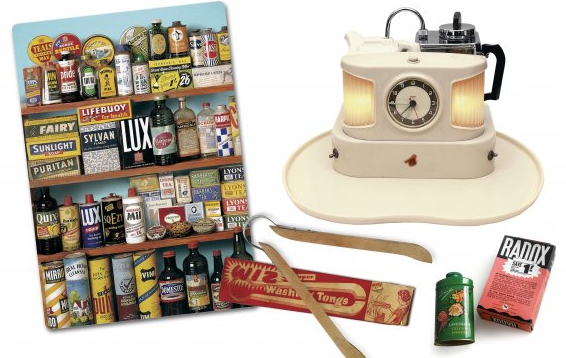
chatterbox imageWith familiar images of everyday life, background information and prompts, the cards trigger easy connection between young and old so that they can share and enjoy fun conversations about people’s life experiences from the times that hold their most vibrant and enduring memories.

Does colour make a difference?

There has been a lot of evidence collected about the benefits of using coloured crockery for people with dementia. What is less clear is whether it is merely a question of improving the contrast between a plate and its background so that it is easier to see, or whether particular colours actually provide stimulation to eat. Nottingham University Hospitals (NUH), for example, are now using coloured crockery on all their wards, to ‘help improve the nutrition of patients with dementia’.

NUH and Salisbury District Hospital have chosen to use blue, and Cumbria recommend using either a border or entirely blue crockery. The reasoning behind blue is that there is no blue food so you are always guaranteed a contrast. Whilst the King’s Fund Environment Assessment Tool  emphasises the relevance of contrast in general, others have had particular success with red. Read about Amber Lodge’s introduction of red crockery in 2011, courtesy of Care Industry News, and here is news of another  person’s spectacular results with red crockery, courtesy of Torbay Dementia Action Alliance.

Further information:

How contrasting colour can help people with dementia, courtesy of Alzheimer’s Society

The importance of colour and contrast, courtesy of The Dementia Centre, Stirling

Suppliers of virtually unbreakable coloured tableware: Harfield


Care Charts UK Founder named as one of HSJ’s Innovators 2014

Care Charts UK’s Founder Zoe Harris is delighted to have been included in HSJ’s list of Top Innovators 2014, celebrating ‘those working in the NHS and the wider healthcare sector who have taken innovative approaches that make a tangible difference to patients, their colleagues or wider society’.

The judges worked around some broad criteria: significance, or how big the problem solved has been; impact, or what difference the innovation has made and to what extent it has worked to change things; and support, or how the innovation has fostered and led to other innovation and how it has given inspiration to others.

What the judges said: “In response to her and husband’s experiences, Zoe has invented a great product which is now used by lots of hospitals and care homes.”

Alastair McLellan, Editor of HSJ, said “Our list, we’re pleased to say, is diverse, encompassing everything from top-flight clinicians at the leading edge of their research fields through to frontline staff, patients, managers and simply free-thinking spirits, from within and outside the NHS, who have brought their imagination and creativity to bear. It shows how, for all the NHS can be at times big, unwieldy and bureaucratic, it should be applauded for still allowing space for innovation and “blue sky” thinking…”

Click here for the full list of HSJ Innovators 2014.


Knowledge empowers, but how best to collect that knowledge?

I was at the Alzheimer Europe Conference in Glasgow recently, and listened to a lot of knowledgeable and passionate people determined to make dementia care better. In one presentation, a simple story was told about a lady who had recently moved to a care home with advanced dementia, and was forever wailing and shouting. No-one could identify the cause of her distress until finally, with some close observation, a carer worked out she had toothache. She applied some Sensodyne toothpaste on her gums and, hey presto, the lady stopped wailing. And then the speaker said, as an aside, the husband was able subsequently to confirm that his wife had always suffered with toothache.

This story was presented as a success, but should it be seen as such? Her husband had information that could have prevented her from going through days, even weeks of pain and upset. Information that could have avoided the disturbance of her fellow residents, and the concern of the staff. It didn’t occur to him to mention his wife’s history of toothache, and no-one asked him. I am not suggesting for a moment he was in any way to blame. I know only too well how obvious these things appear in hindsight, but there was nothing in the system to prompt that conversation. The prompt on our Care Charts regarding teeth is “What I’d like you to know about my teeth or dentures”. That may or may not have been enough to trigger a thought in his mind about her requirement for oral pain relief if he had seen it. I suspect dental issues are a significant cause of discomfort or pain in people living with dementia and it may be that a more proactive approach to information gathering would avoid delays such as this poor lady had to suffer, before the cause of her discomfort could be established.

I discovered a similar example today, in this video. A man with advanced dementia spent all day in his room doing absolutely nothing. When his family came to visit they saw that a flight simulator was included in an activities console the care home had invested in, and it triggered a memory. “We didn’t think to tell you this,” said a member of the family,  “but our father was a pilot in the Korean war.” They hadn’t said anything, no-one had asked and it hadn’t occurred to them that this information held the key to bringing their father out of his almost catatonic state. He now spends hours landing planes on the flight simulator, and has started to participate in other activities during the day as well.

Nice story, but what about the weeks, perhaps months he had been there without the information staff needed to coax him back into taking an interest in life? Whether or not there was a flight simulator to hand, the fact that he had been a pilot should have been made available to all staff; at the very least it provided an opportunity for a conversation at some level, perhaps an attempt to interest him in pictures of aeroplanes, anything.

I suspect these stories are the tip of the iceberg, certainly I have heard many, many more. We need to increase awareness of WHY information is collected from friends and families when their loved one moves to a care home, find ways of doing it better, and make sure it is accessible to EVERYONE interacting with the person.

Epsom Hospital puts Care Charts at heart of dementia care

“I couldn’t possibly have hoped for a better result,” said Sue Cook, the Older Persons Assessment and Liaison for Dementia (OPAL) team leader at Epsom Hospital, part of Epsom and St Helier University Hospitals NHS Trust.

We were meeting after their three month trial of the Twist-N-View Display Chart, which they are using to assist in the care of patients with a dementia diagnosis. They have chosen to insert a picture of a forget-me-not into the clear front pocket of the Care Chart, and have included the charts in their training programme so everyone from porters to consultants is aware of the significance of the bright blue flower, and that information about a patient can be found on the reverse.

“I was concerned that staff would see it as yet another task to be completed,” Sue continued. But very soon after the charts were introduced and families were encouraged to complete a chart for their relative, the positive comments started to flow.

“Nursing staff realised that the charts gave them the ability to engage much more quickly with a patient who might not be able to communicate reliably,” said Sue, “because information is immediately available to them, and it gives non-nursing staff like porters an opportunity to open a conversation with the patient, when before they wouldn’t have access to simple information like their favourite foods, or important people in their lives, what they do or did for a living.”

“We had one lady,” Sue continued, “who had nobody in the world, friend or family, and the only piece of information we managed to find out was that she had a cat called Penny. So that went on the chart, and it gave everyone interacting with her something they could talk about. And we sang happy birthday to another patient, because we saw his date of birth on his care chart. Of course, everyone’s date of birth is on their records, but that’s just seen as a bit of admin, whereas something written on the care chart is about the person, a reminder that, even if they can’t speak or do anything for themselves, they have history, family, things they love and hate, like the rest of us.”

The hospital is now rolling the charts out to more wards, with the ultimate aim of incorporating Care Charts into the daily life of every ward across the Trust.

Read about how Epsom Hospital is adopting care charts and other innovations to better care for people with dementia. Epsom Hospital News

To read about the results of trials in community hospitals click here.